
Estimator času na dosažení úrovně B1 v němčině
Podle Evropského rámce pro jazyky (CEFR) potřebujete přibližně 180 hodin pro dosažení úrovně B1 v němčině. Tento nástroj vám ukáže, jak dlouho vám bude trvat dosažení této úrovně na základě vašeho denního studia.
Odhadovaný čas
Na úroveň B1 v němčině
Many people in the Czech Republic think learning German is hard. Some say it’s impossible. Others claim it’s easier than English. The truth? It’s not about being hard or easy-it’s about němčina matching your brain’s wiring. If you speak Czech, you already have a head start. But you also carry some traps that make it harder than you think.
Proč se němčina zdá tak těžká?
First, let’s get real: German grammar looks scary. Four cases. Three genders. Verbs that split in two. But here’s the thing-you’ve already seen this in Czech. We have seven cases. We change nouns, adjectives, and pronouns based on their role in a sentence. If you can say "kniha na stole" and "kniha vidím", you already understand case systems. German just uses fewer forms. The real shock? Gender. German has der, die, das. Czech has mužský, ženský, střední. Sounds similar? It is. But in German, you have to memorize which word gets which article. "Die Frau" is feminine. "Das Mädchen" is neuter. Why? No one knows. It’s just how it is.
Then there’s word order. German lets you move things around. "Ich gehe morgen ins Kino" vs. "Morgen gehe ich ins Kino"-both are correct. Czech doesn’t do that. We’re more rigid. So your brain says: "That’s not how sentences work!" But German isn’t broken-it’s flexible. And once you get used to it, you’ll find it gives you more control over what you emphasize.
Co je skutečně těžké?
It’s not the grammar. It’s the pronunciation. Czechs struggle with the guttural "ch" sound. You’ve heard it in "Buch" or "Nacht". It’s not like our "h". It’s deeper, from the back of the throat. Many Czech learners say "buk" instead of "buch"-and native speakers notice. Then there’s the "r". In German, it’s often rolled lightly or swallowed. In Czech, we roll it hard. That difference makes your German sound "foreign" even if your grammar is perfect.
And vocabulary? Yes, there are false friends. "Gift" means poison in German, not present. "Mist" isn’t manure here-it’s nonsense. "Koffer" is luggage, not a type of coffee. You’ll mess up. Everyone does. But here’s the good news: 30% of German words are similar to English. And since most Czechs know English, you’re already halfway to German. "Computer", "Hotel", "Telefon"-they’re almost identical.
Proč je němčina pro češky vlastně jednodušší, než si myslíte?
Let’s flip the script. Czech and German are both Indo-European languages. That means they share roots. The word for "house"? "Haus" in German, "dům" in Czech. Not the same, but both come from the same ancient root. Verbs? "Ich habe" = "mám". "Du hast" = "ty máš". The structure is almost parallel. You’re not starting from zero. You’re rebuilding something you already know.
Also, German spelling is logical. Once you learn the rules, you can read almost anything. "Schule" is pronounced "shoo-leh". "Buch" is "boo-kh". No silent letters. No crazy exceptions like in English. If you know how to spell it, you know how to say it. That’s huge. Czech has its own spelling quirks, but German is more consistent.
And here’s something no one tells you: German has fewer idioms. English says "it’s raining cats and dogs". German says "Es regnet"-it’s raining. Simple. Direct. No metaphors. That makes comprehension easier. You don’t need to decode cultural jokes. You just get the meaning.
Co opravdu pomůže? Praktické tipy
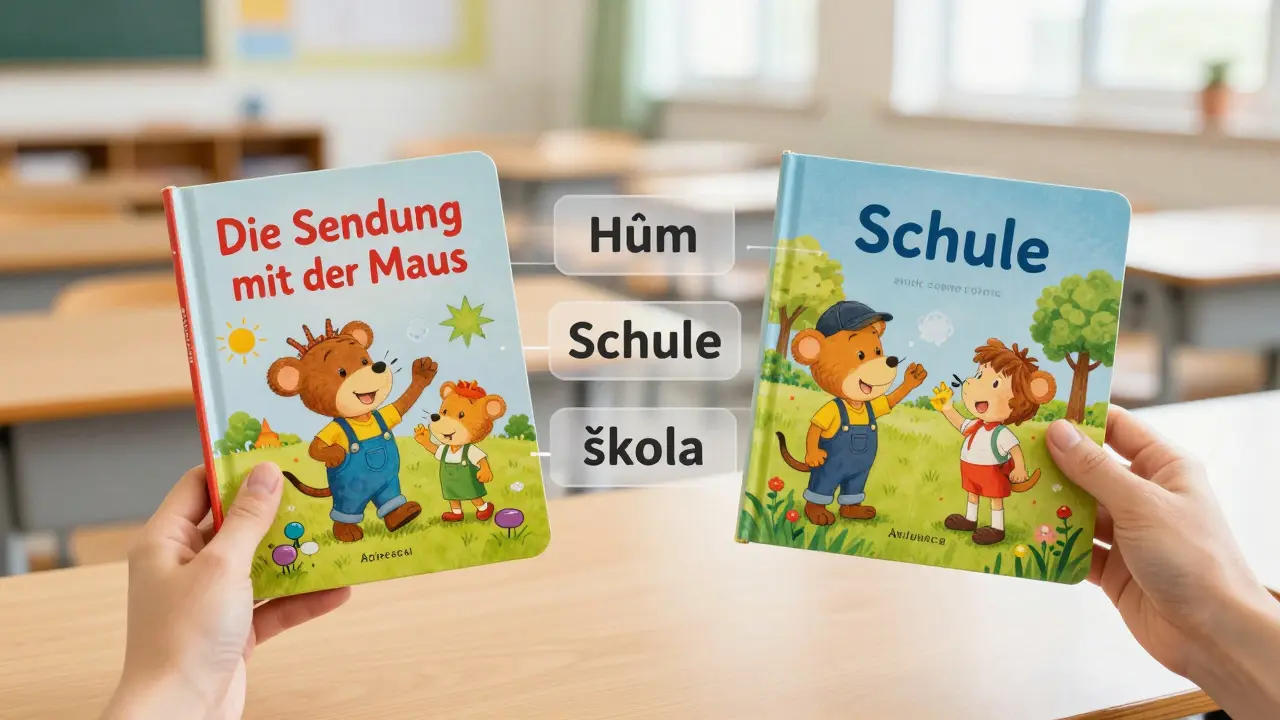
Stop memorizing lists. Start listening. Watch German YouTube videos with Czech subtitles. Start with children’s shows like "Die Sendung mit der Maus". Slow speech. Clear words. Real context. After two weeks, switch to German subtitles. Then turn them off. Your brain will adapt.
Use apps, but not like flashcards. Try LingQ or Readlang. Upload German articles from newspapers like "Der Spiegel". Highlight words you don’t know. The app shows you how often they appear. Focus on the top 500 words. That’s 80% of daily conversation.
Speak from day one-even badly. Find a language partner on Tandem or HelloTalk. Ask: "Wie sagt man...?" (How do you say...?) Don’t wait until you’re "ready." You’ll never be ready. Just start. Say "Ich heiße Martin". Say "Ich möchte Kaffee". Even if you mess up. Germans love when foreigners try. They’ll help you. They’ll slow down. They’ll repeat it.

Co se stane, když se naučíte němčinu?
If you learn German, you unlock more than just travel. You get access to Europe’s largest economy. You can read scientific papers, watch documentaries, or work remotely for German companies. Many Czechs in IT, engineering, or design already do. You don’t need to move to Berlin. You just need to understand a job posting.
And emotionally? You’ll feel different. You’ll hear German music and understand the lyrics. You’ll watch "Tatort" and laugh at the jokes. You’ll read Kafka or Hesse in the original. That’s not just language. That’s connection.
Je němčina těžká? Záleží na tobě
It’s not harder than English. It’s not easier than Russian. It’s different. And if you’re Czech, you’re already halfway there. You’ve lived with complex grammar. You’ve learned to adapt. You just need to redirect that skill.
Don’t compare yourself to someone who learned Spanish. Don’t panic because you forgot the dative case. Just keep showing up. Five minutes a day. One new word. One sentence. One conversation. That’s all it takes. German isn’t a mountain. It’s a path. And you’ve already taken the first step.
Je němčina těžší než angličtina pro češky?
Pro mnohé Čechy je angličtina snazší, protože ji slyší každý den v médiích, filmech a online. Němčina je ale v mnoha ohledech logičtější. Má pravidelnou výslovnost, méně idiomatických výrazů a spoustu slov, která vypadají podobně jako čeština. Ale gramatika němčiny je složitější. Pokud jste zvyklí na české pády, němčina vám přijde přirozenější než angličtina.
Je lepší se učit němčinu online nebo na kurzu?
Online učení je ideální, pokud chcete flexibilitu a vlastní tempo. Kurzy jsou lepší, když potřebujete strukturu a zpětnou vazbu. Nejlepší kombinace: online materiály (např. Deutsche Welle) + jedna hodina týdně s učitelem nebo jazykovým partněrem. Takto si vytvoříte pevný základ a zároveň si udržíte motivaci.
Kolik času trvá naučit se němčinu na úrovni B1?
Podle Evropského rámce pro jazyky (CEFR) potřebujete přibližně 360-400 hodin. To znamená, že pokud se učíte 30 minut denně, zvládnete to za 12-14 měsíců. Pokud se učíte 1 hodinu denně, můžete dosáhnout B1 za 6-8 měsíců. Klíčem je pravidelnost, ne intenzita.
Které části němčiny bych měl začít?
Začněte s tím, co potřebujete hned: přivítání, představení, objednávání jídla, otázky cestovatele. Poté se zaměřte na základní pády (nominativ a akuzativ), zájmena a slovesa v přítomném čase. Učte se slova ve větách, ne zvlášť. Například: "Ich gehe in die Schule"-nejen "Schule". Takto si pamatujete kontext, ne jen slovo.
Proč se německé slovo "Kraft" vyslovuje jako "kraft" a ne "kravt"?
V němčině se písmeno "f" vždy vyslovuje jako /f/, nikdy jako /v/. Čeština má zvuk /v/ na konci slov, ale němčina ne. "Kraft" má na konci /f/, takže se říká "kraft". To je jedna z nejčastějších chyb českých mluvčích. Většina němců pochopí, když řeknete "kravt", ale přesnější výslovnost vás udělá slyšitelnější a důvěryhodnější.






Napsat komentář