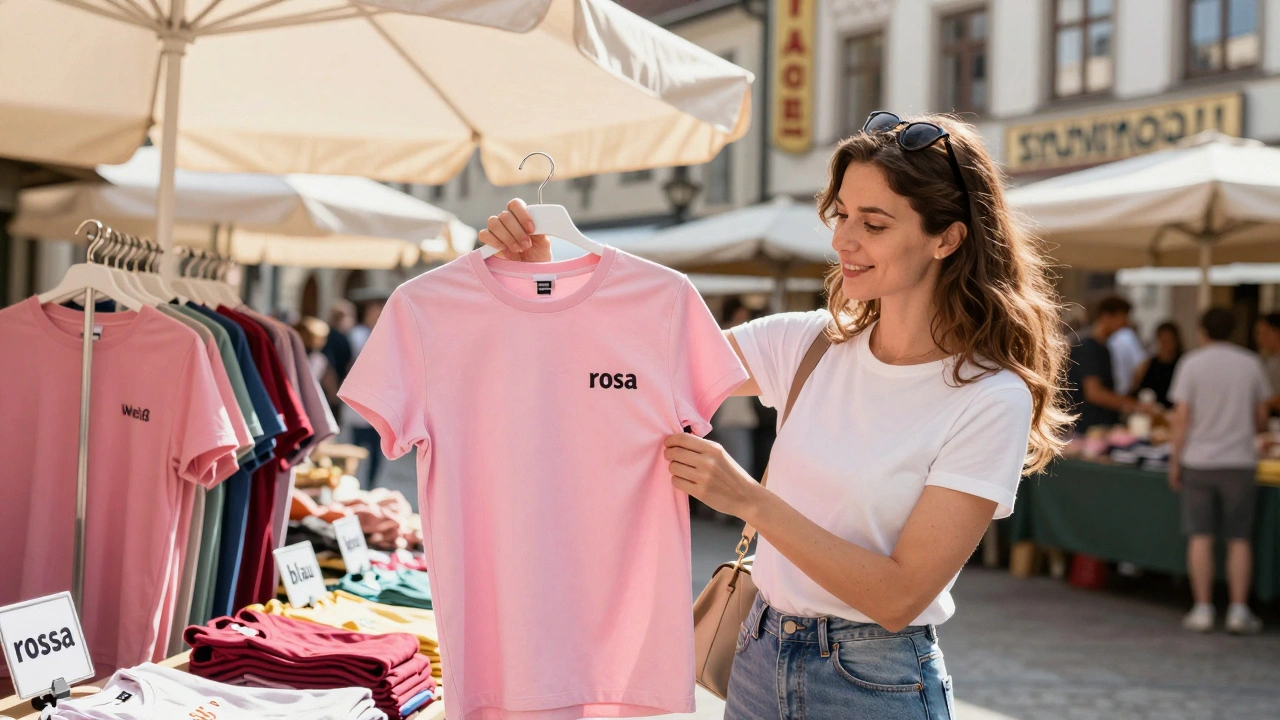
Jak se řekne německy růžová? Základní barvy v němčině pro začátečníky
Zjistěte, jak se řekne růžová po německy, a naučte se základní barvy v němčině pro každodenní situace. Praktické tipy, chyby a příklady pro začátečníky.

When you need to describe something by color — like your shirt, your car, or the sky — knowing the right word in another language makes all the difference. překlad barev, překlad názvů barev do cizího jazyka, jako je angličtina, španělština nebo němčina. Also known as překlad barevných názvů, it’s not just about memorizing words — it’s about using them naturally in real conversations. Many people think "red" in Spanish is "rojo," and they’re right — but they don’t realize that "rojo" can also mean "angry" in some contexts, or that German speakers often mix up "blau" and "grün" when they’re tired. These aren’t just translations — they’re cultural shortcuts.
When you’re learning a language, colors are among the first words you encounter. But they’re also the ones that trip you up later. Why? Because languages don’t always split the color spectrum the same way. English has "light blue" and "dark blue," but in Czech, you might just say "modrý" and rely on context. In Spanish, "azul claro" and "azul oscuro" are common, but in German, you’ll hear "helles Blau" and "dunkles Blau" — and if you say "blau" alone, people will still understand you. That’s the beauty of it: you don’t need perfect precision to be understood. What matters is consistency. Use the same word the same way, and people will catch on. And if you’re using colors to describe objects — like a red door or a green bike — you’ll find that the structure of the sentence changes slightly in each language. In English, you say "a red car." In Spanish, it’s "un coche rojo." In German, "ein rotes Auto." The adjective moves, and sometimes even changes form. That’s why just memorizing a list of colors isn’t enough. You need to see them in action.
That’s exactly what you’ll find in the posts below. We’ve gathered real examples from everyday use — from how to describe your favorite T-shirt in English, to why Spanish speakers say "amarillo limón" instead of just "amarillo," and how Germans use colors in directions like "nimm die rote Straße." You’ll learn which color names are easy to mix up, which ones change with gender, and how to avoid sounding like a textbook. No fluff. No theory. Just what works when you’re talking, texting, or traveling. Whether you’re learning for fun, for work, or just to understand your partner’s shopping list, these posts will help you get there — one color at a time.
Zjistěte, jak se řekne růžová po německy, a naučte se základní barvy v němčině pro každodenní situace. Praktické tipy, chyby a příklady pro začátečníky.

Naučte se, jak se řekne žlutá v němčině, a pochopte, jak se barvy skloňují v různých kontextech. Praktický přehled barev, pravidla a tipy pro začátečníky.